
What You Need to Know When Planning a Wedding Day Timeline in France (South of France)
Planning a wedding in France can feel unfamiliar when you’re organising it from abroad. The rhythm of the day is different, meals tend to happen later, and the way light moves through the afternoon doesn’t always align with what you may be used to in the UK, the US, or elsewhere.
This article offers a photographer’s perspective on how a wedding in France typically unfolds, and how a wedding day timeline in France can be thoughtfully planned to leave room for light, breathing moments, and images that feel natural rather than rushed.
Understanding the Rhythm of a Wedding Day in France
How a Wedding Day Usually Flows in France
Weddings in France naturally move through moments of intensity and transition, as any wedding day does. What defines their rhythm is less about structure and more about how time is distributed across the day.
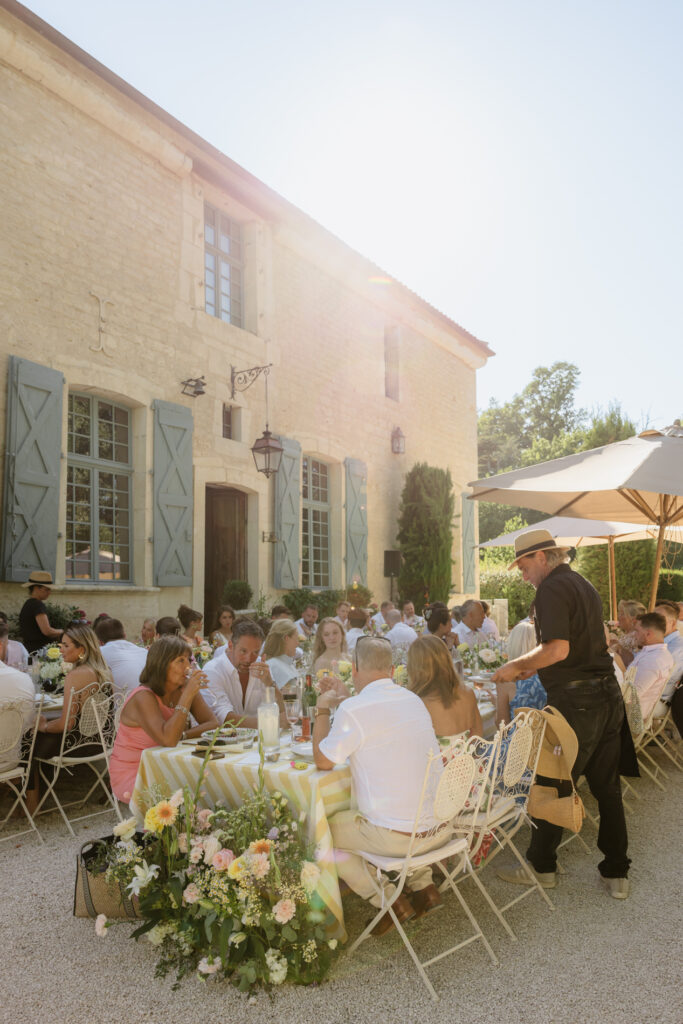
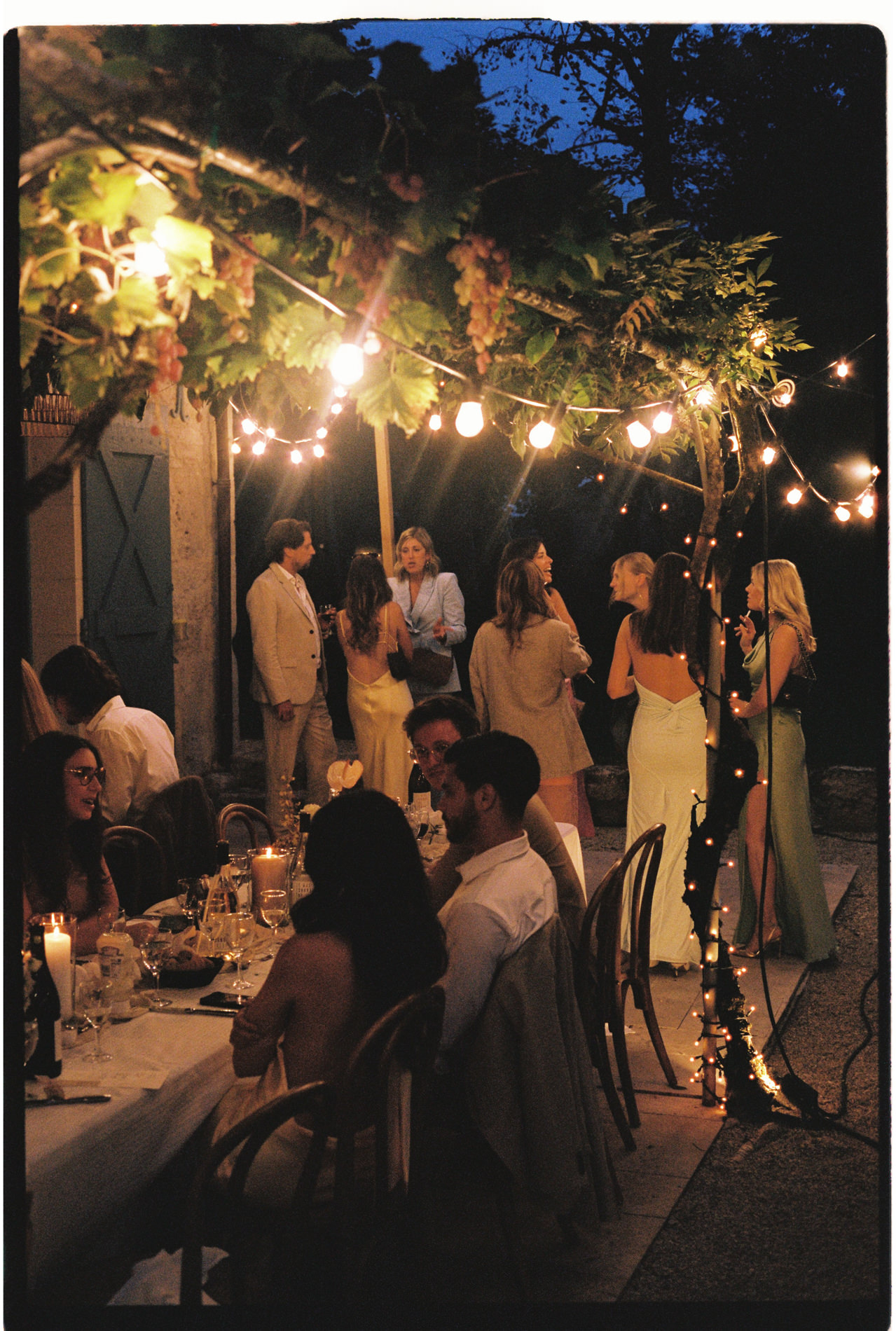
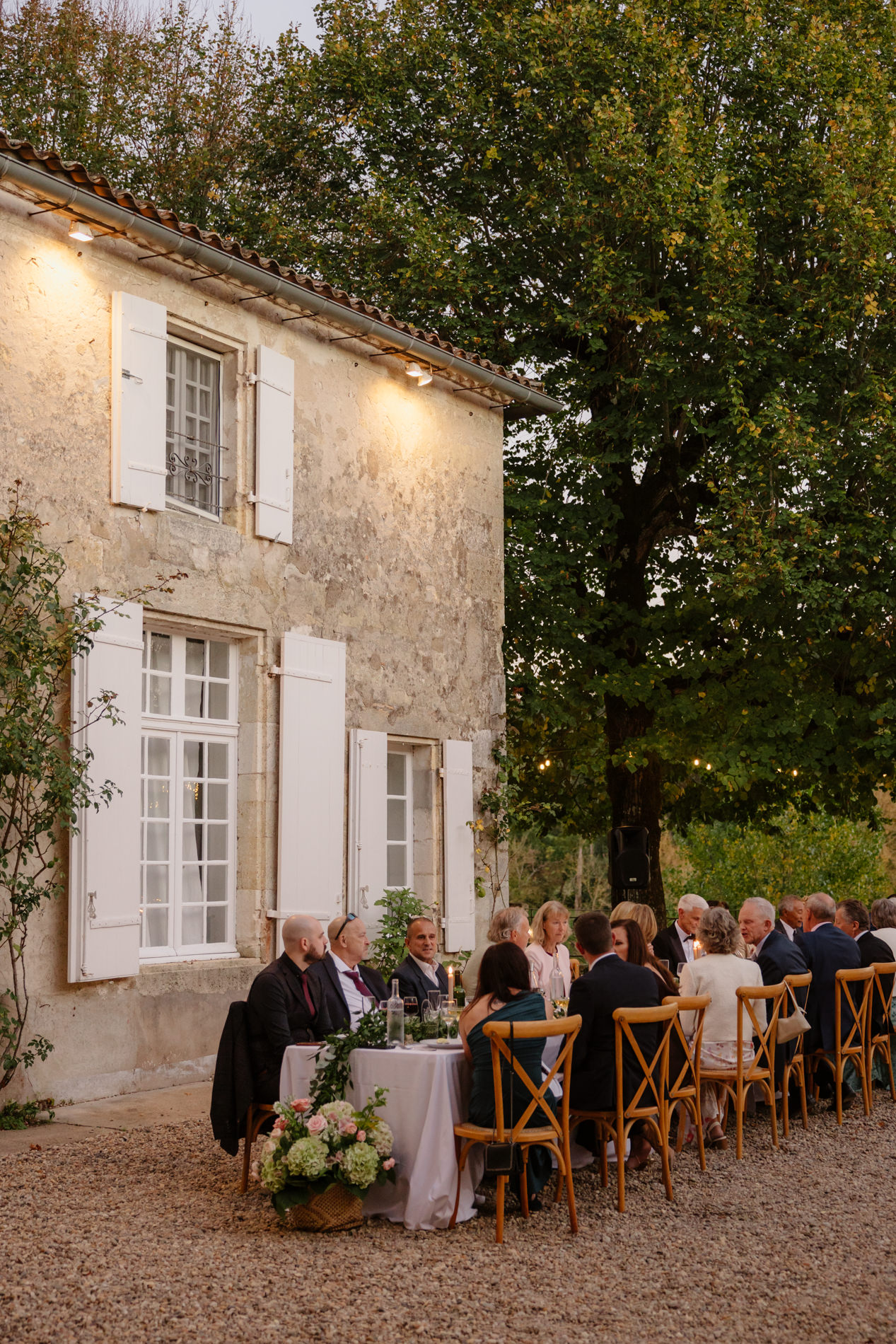
Ceremonies often take place in the afternoon, followed by a cocktail hour that gives guests space to reconnect, circulate, and settle into the atmosphere. In summer, dinner is typically served later in the evening — often around 9 p.m. — and may last several hours, sometimes up to four, depending on the number of guests and the flow of the meal. At this point, the sun has already gone down or is just about to, and the energy of the day naturally begins to shift.
This is where the French art de vivre becomes most visible. Dinner is considered a central part of the celebration rather than a simple interlude. Courses unfold gradually, conversations extend, and the table becomes a place where the energy of the day stabilises before evolving again. Even within a full and active schedule, these long summer dinners allow the celebration to unfold at its own pace and carry naturally into the night.
Adapting a French Wedding Rhythm to Your Own Pace
Many couples who choose to get married in France are drawn to this slower tempo. They come for the landscapes, the food, the atmosphere — but also for the feeling that time expands around meaningful moments.
Embracing a French wedding rhythm doesn’t mean abandoning your own habits or expectations. Rather than following a predefined format, it’s about taking inspiration from the flow and adapting it to what feels right for you — whether that means a longer dinner, a later evening, or a more relaxed cocktail hour.
Understanding this rhythm early on allows you to make conscious choices: what you want to slow down, what you prefer to keep simple, and where you’d like to create space.
As a wedding photographer based in the South of France, my role is to work within this rhythm and the natural light that shapes it — helping you shape a timeline that respects the local flow while staying true to how you want to experience your day.
Light and Climate in the South of France
The South of France is known for its long summer days, bright light, and warm climate — elements that strongly shape how a wedding day feels and unfolds, and naturally influence the way a wedding day timeline is planned. From late spring through summer, temperatures can rise quickly, especially in the early afternoon, while the sun remains high in the sky for several hours.
Planning the day with climate in mind is therefore about comfort as much as atmosphere. Starting later in the afternoon often allows everyone to feel more at ease, while shaded areas, covered spaces, and thoughtful orientation become key when earlier moments are necessary. Taking light and temperature into account helps create a timeline that feels balanced, fluid, and adapted to the environment.
Midday Light and Heat: What to Expect in Summer
During summer months in the South of France, the middle of the day is often the warmest and brightest. Temperatures can be high, and the sun sits almost directly overhead, creating strong contrasts and very little natural shade. For guests — and for you — this can quickly become tiring, especially during longer moments such as a ceremony or cocktail hour.
For this reason, ceremonies held before mid-afternoon can feel physically demanding if they’re fully exposed. When earlier timings are unavoidable, choosing shaded areas, covered spaces, or locations oriented away from direct sun makes a significant difference. Starting the key moments later in the afternoon is often a simple way to improve comfort for everyone, while also allowing the day to unfold more calmly.
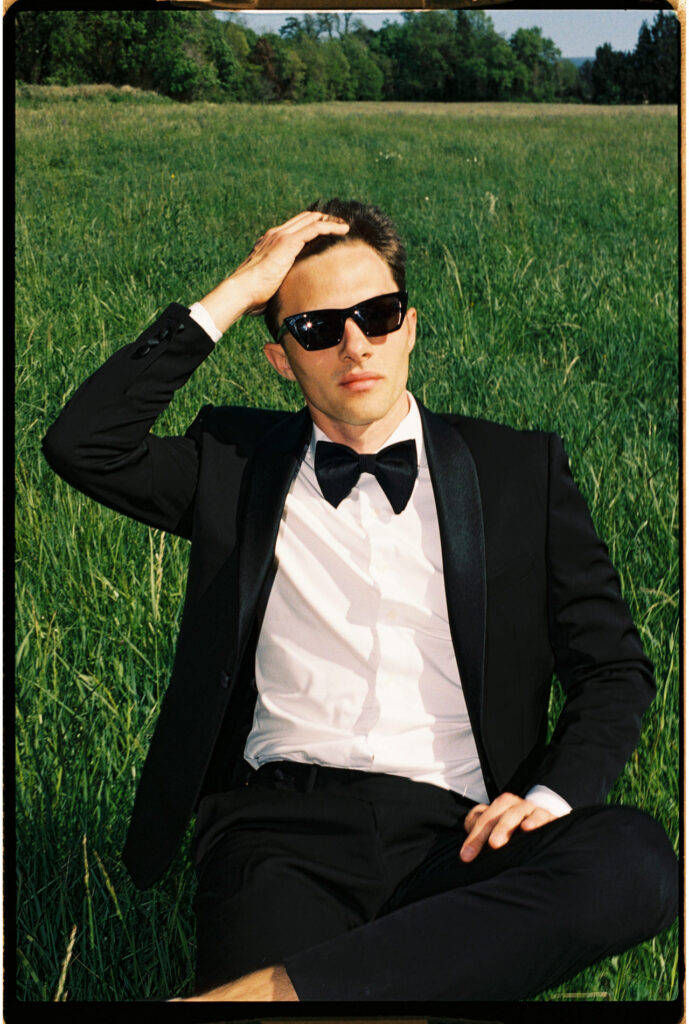
Direct Sun and Editorial Light
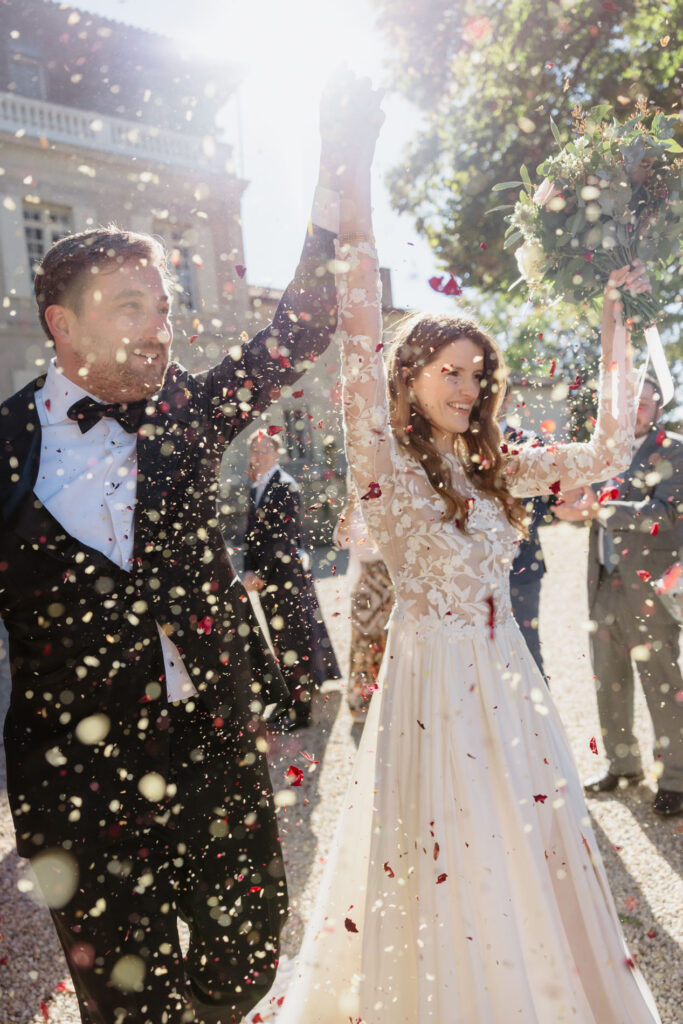
When the sun is high and unobstructed, light becomes more graphic and contrast-heavy. Shadows are sharp, highlights are strong, and the overall feel is bolder and more direct. This type of light is often associated with a more editorial aesthetic — confident, modern, and sometimes playful — where sunglasses, movement, and attitude naturally find their place.
This isn’t a “better” or “worse” light, just a different one. Understanding its character helps set expectations and allows you to embrace it intentionally, rather than working against it. When approached with the right mindset, direct sun can bring a very distinctive visual energy to certain moments of the day.
Softer Evening Light and Sunset
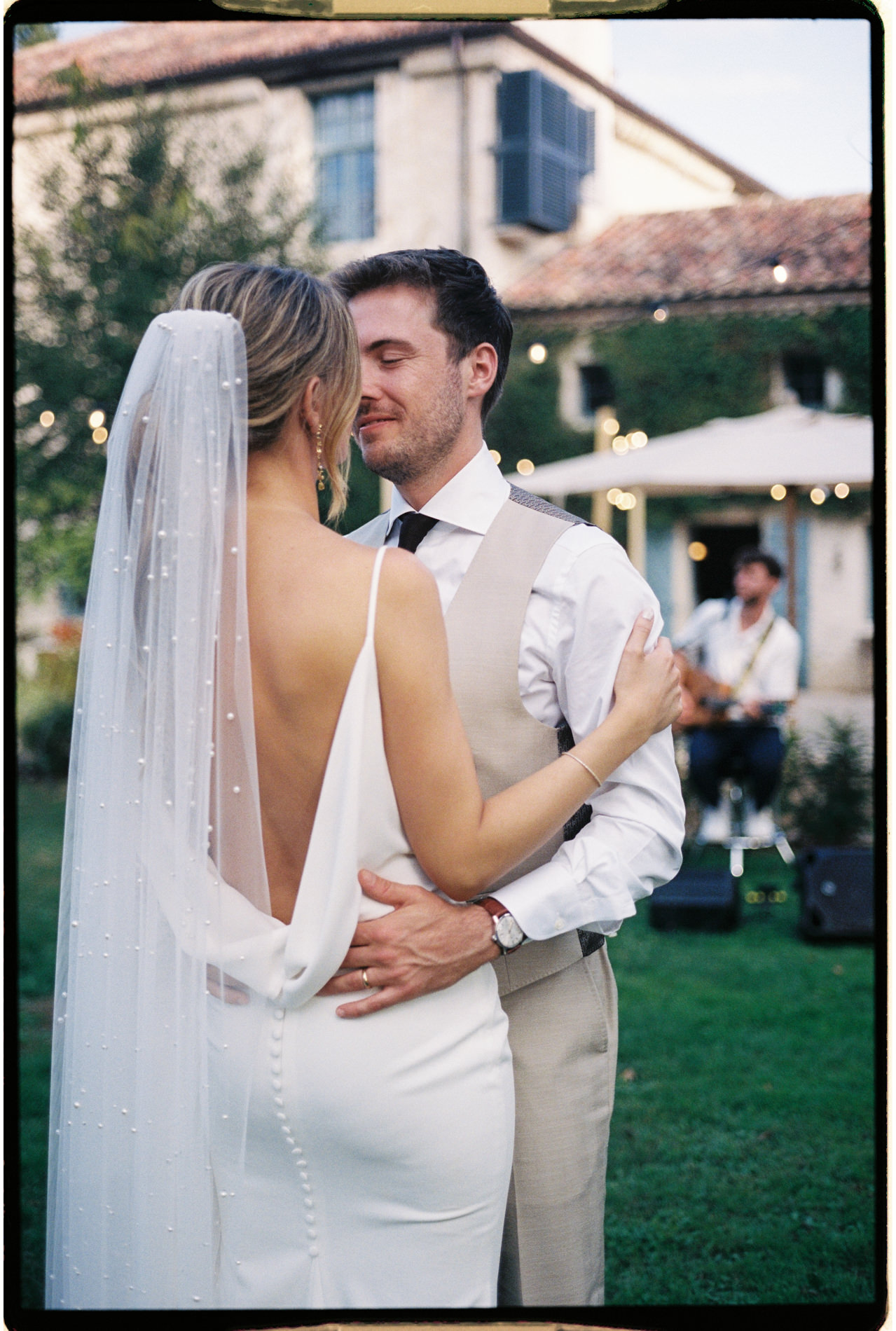
As the day progresses, light gradually softens and the atmosphere shifts. Evenings in the South of France tend to arrive slowly, creating a calmer, more intimate feel as the celebration continues. This transition often happens while guests are already seated and the rhythm of the day has settled.
At this point, it can be easy to step away briefly — sometimes during dessert or a natural pause in the meal — for a few quiet images together. These moments are kept short and discreet, designed to fit seamlessly into the flow of the evening without pulling you away from what’s happening around you.
Here’s an example timeline where sunset images work really well in the schedule:
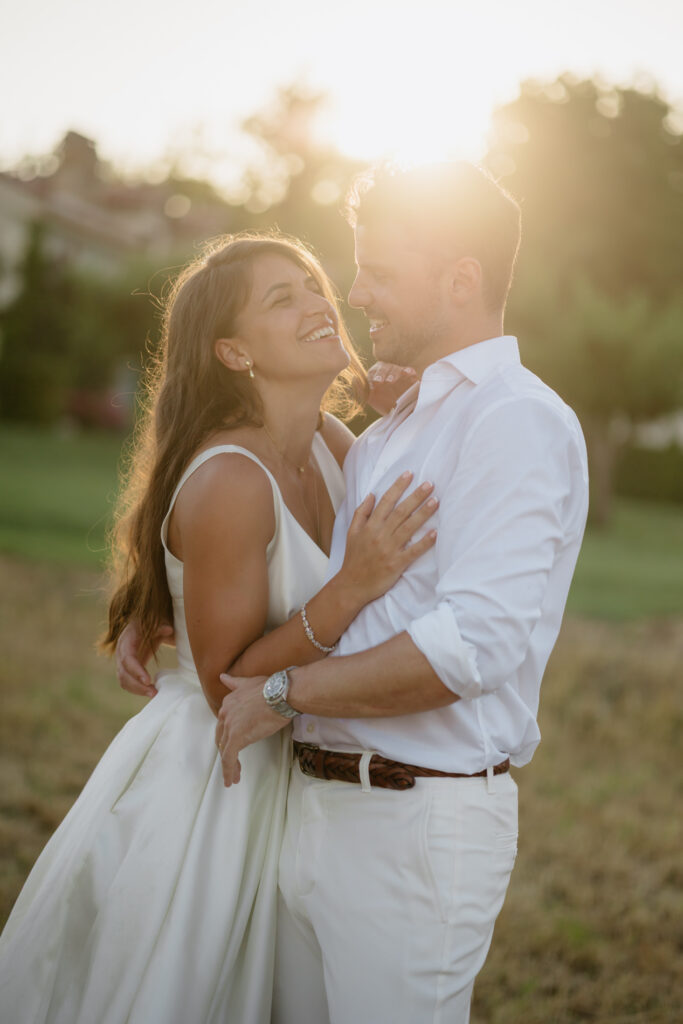
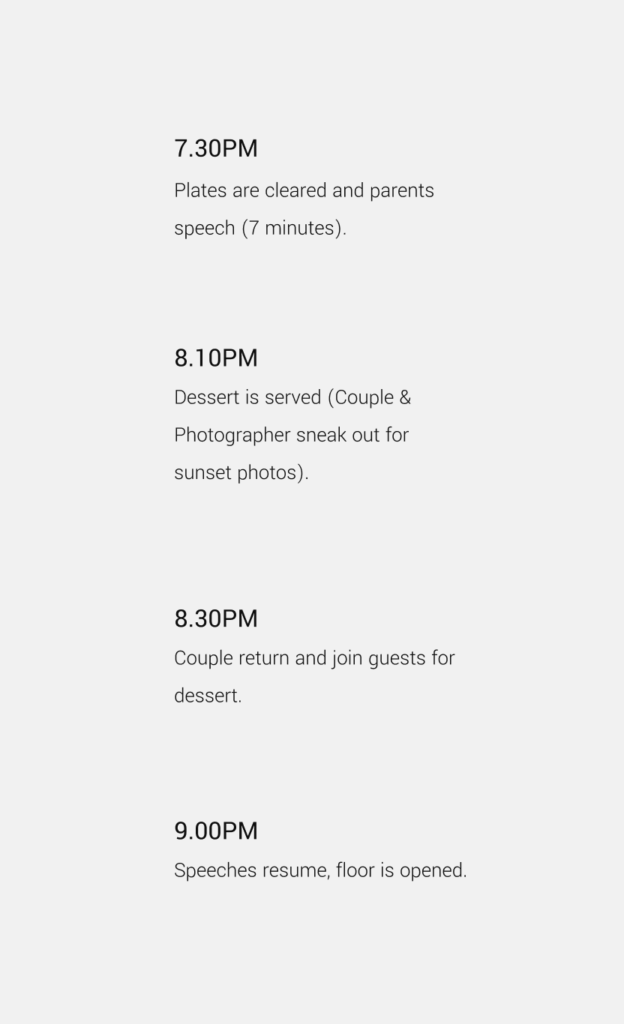
In this example, sunset is at 8:30 pm, which means the most favourable window for photos would typically start around 8:00 pm. This timing is purely indicative and can vary depending on your venue — for instance, whether it is located on a hill, open to the horizon, or shaded in a valley where light fades earlier. The timing of your wedding day also depends on the season, as the best time for a destination wedding in the South of France directly influences how light evolves throughout the day.
You can see in the above example that we have timed it so that Dessert will come out just as we need to pop out – so the guests aren’t missing us and the flow of the evening isn’t lost.
OVERVIEW
Exemple of a wedding day timeline in France
Around 2pm
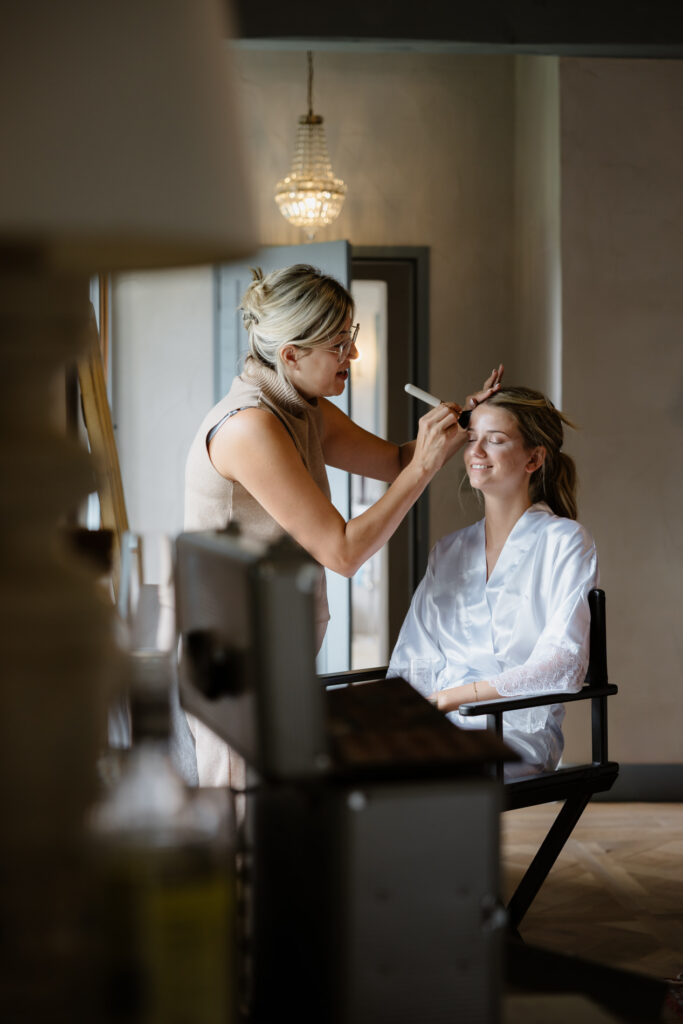
Getting Ready
A calm start to the day, allowing time for preparations, details, and natural moments without rushing.
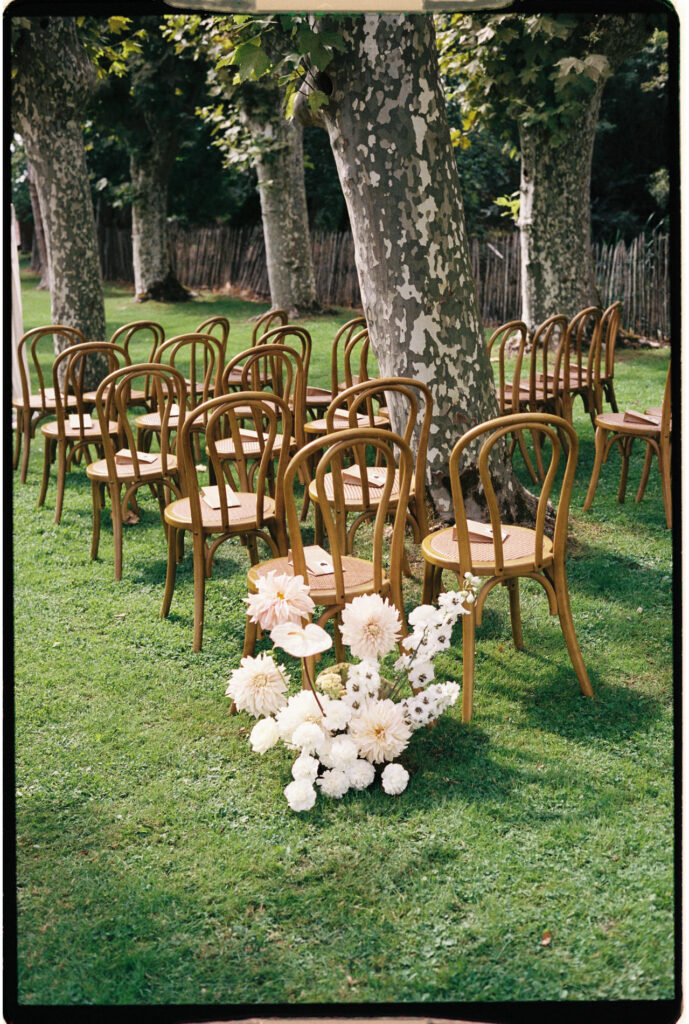
Around 4pm
Ceremony
Scheduled later in the afternoon to avoid the strongest heat and ensure guest comfort.
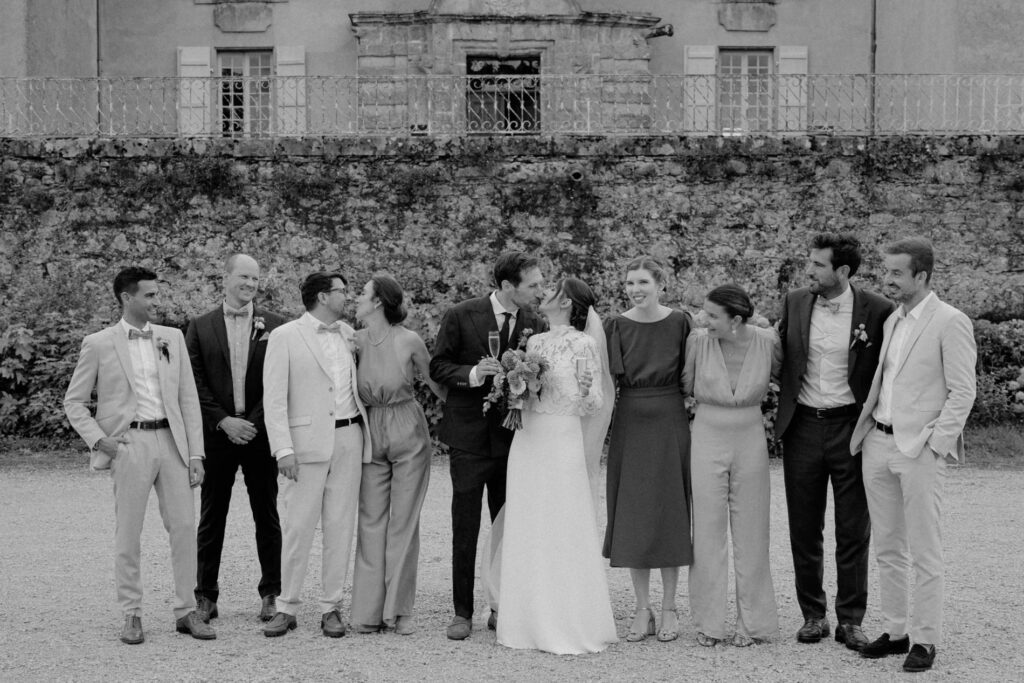
around 4:45pm
Group pictures
Taken shortly after the ceremony, ideally in shaded areas to keep everyone comfortable and the process efficient.
Around 5 pm
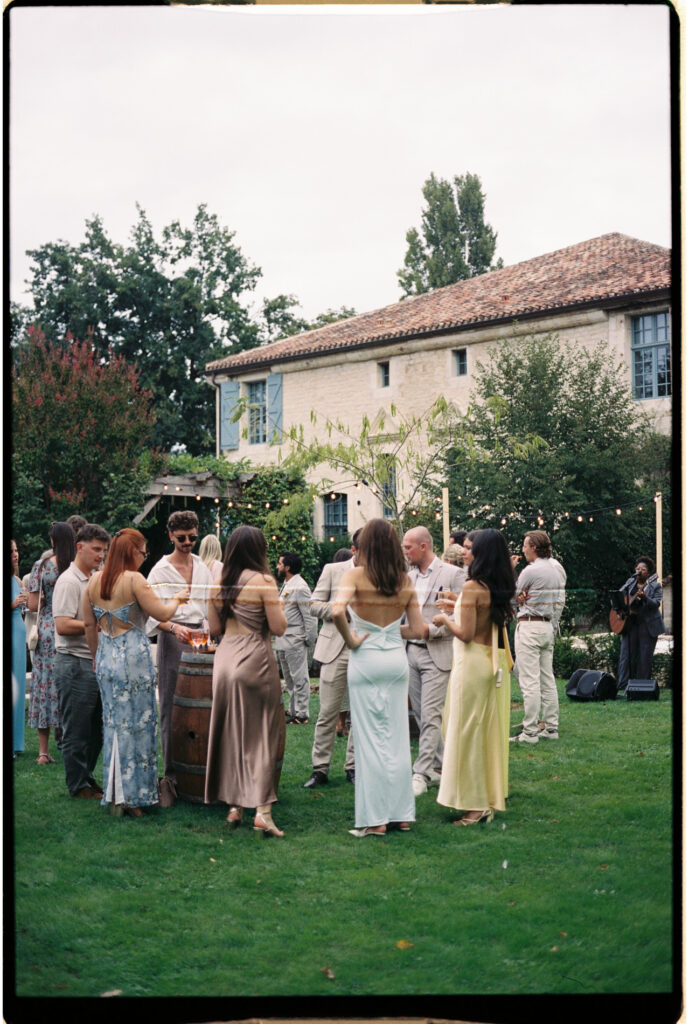
Cocktail
A relaxed transition where guests can circulate, settle into the atmosphere, and enjoy the setting.
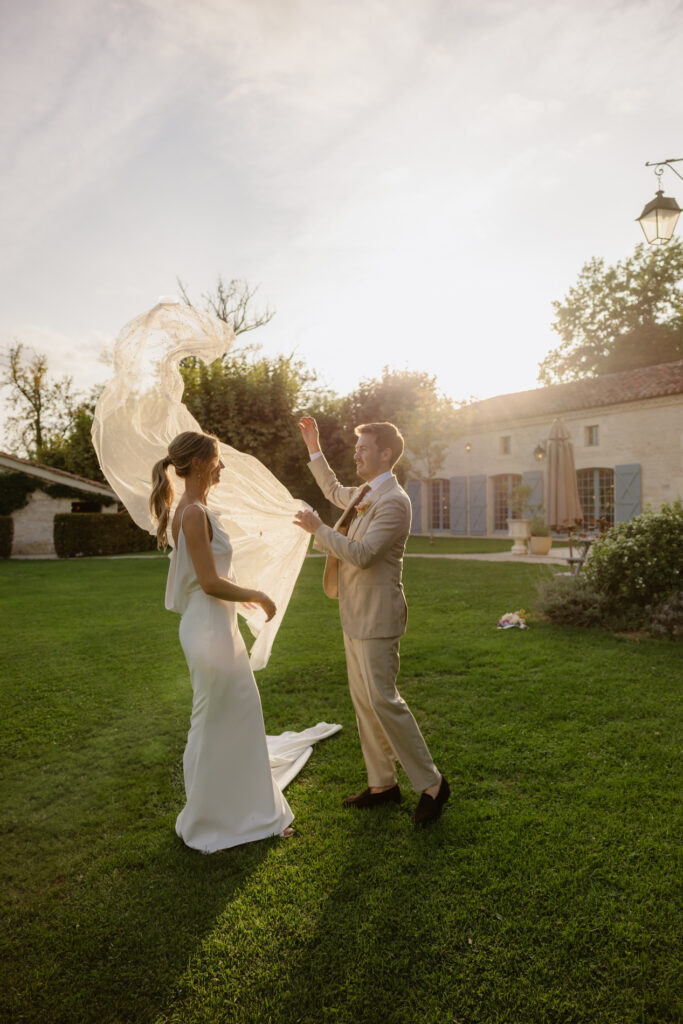
around 6:30 pm
Couple Portraits
A short, intentional moment together, often before dinner, while energy is still high.
Around 7:00
Reception
Dinner begins while it’s still light outside, allowing the evening to unfold naturally as the atmosphere softens.
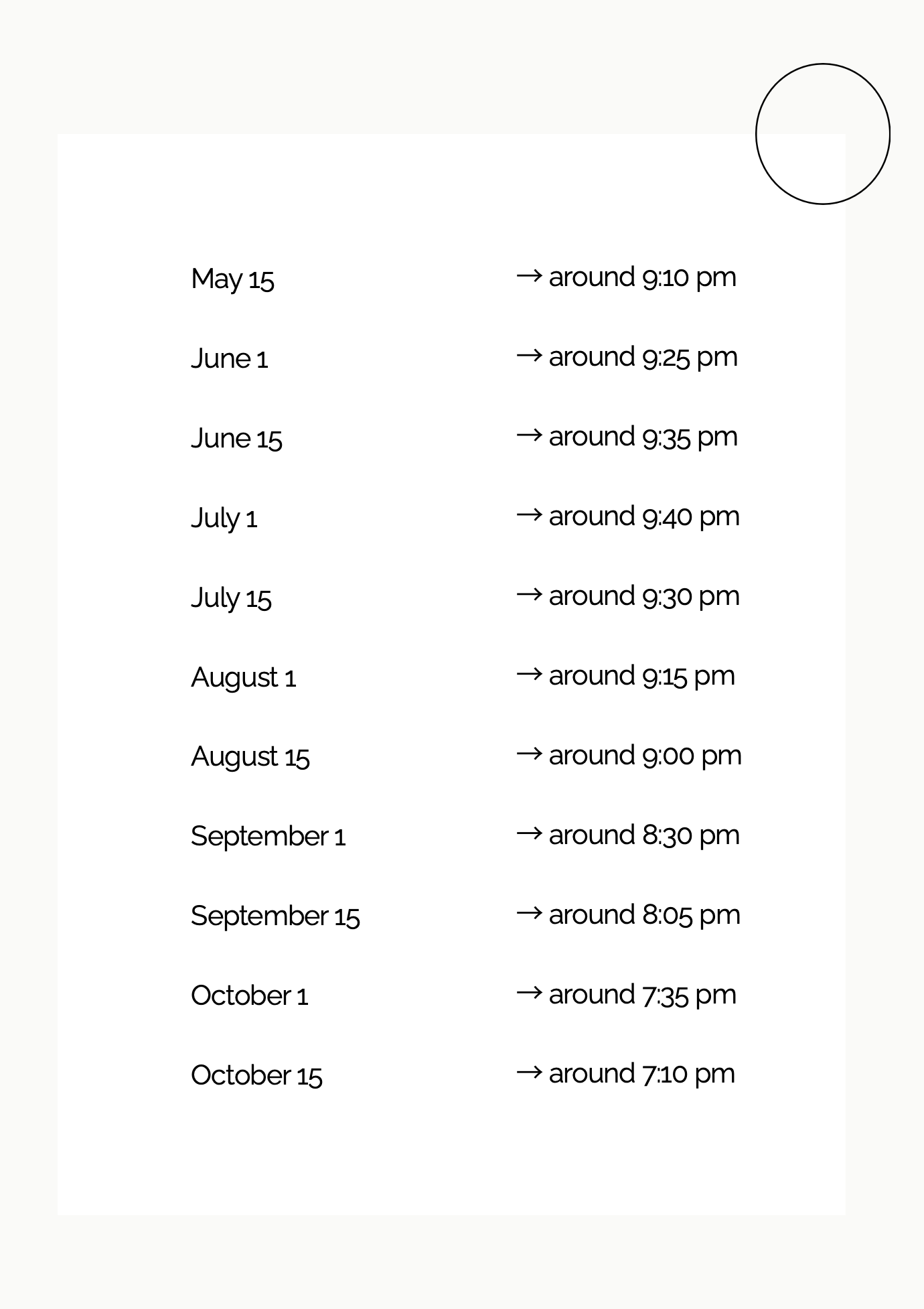
Seasonal sunset guidelines
(South of France – Toulouse area)
You may have heard sunset referred to often by photographers as “golden hour”, this is because in the hour before the sunset goes down landscapes really can look like they’re made of liquid gold. You’ll be familiar with the beautiful images we can create at sunset as it is the optimum lighting conditions in so many ways. Often sunset will be happening during your reception so if sunset photographs together is something you’d like it is beneficial to structure your schedule for this to work.
Here is an approximate overview of sunset times to keep in mind when building your wedding day timeline, if evening light is important to you.
A Timeline That Supports your Wedding Day
Planning a wedding in France is less about filling a schedule and more about understanding how rhythm, climate, and light shape the experience. When these elements are anticipated early on, the timeline becomes a support rather than a constraint — allowing the day to flow more naturally, leaving space for comfort, connection, and images that reflect how it truly felt.
If you’re currently planning your wedding in France and would like to think through your timeline with a photographer’s perspective in mind, you can explore my work and get in touch here.